


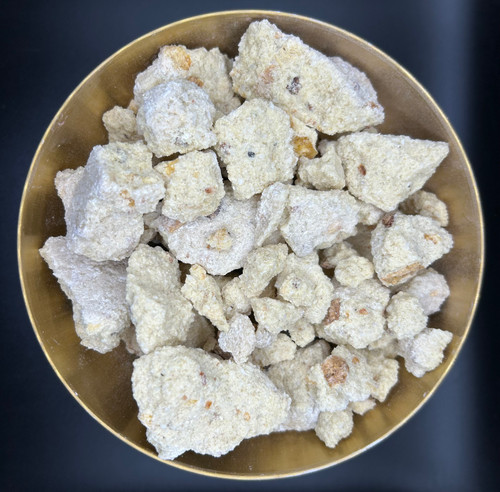
White Benzoin Resin (Styrax benzoin)
White Benzoin, often referred to as White Jawi or Gum Benzoin, is a fragrant natural resin harvested from the bark of the Styrax benzoin tree. Native to the tropical forests of Indonesia and Southeast Asia, the tree produces a balsamic sap that slowly hardens into pale resin chunks after being carefully tapped.
This lighter variety of benzoin forms creamy white to pale amber pieces and is highly valued for its rich, sweet fragrance. When heated, the resin releases a smooth balsamic aroma with warm notes often compared to vanilla, honey, and soft woods. Because of its pleasant scent, benzoin has long been used as an ingredient in traditional incense blends and aromatic preparations.
Aroma Profile
- Sweet balsamic fragrance
- Warm vanilla-like notes
- Soft honeyed sweetness
- Gentle resinous depth
Traditional Use
Benzoin resin has been used for centuries throughout Asia, the Middle East, and Europe as a valued incense material. In India it is commonly known as Sambhrani, where it has traditionally been burned for its pleasant aromatic smoke. The resin is also widely used in perfumery and incense blending due to its ability to add warmth and sweetness to aromatic compositions.
How To Use
Place a small piece of resin on a lit charcoal tablet in a heat-safe incense burner. As the resin warms, it softens and releases its characteristic sweet balsamic aroma. A thin layer of ash or sand beneath the resin can help moderate the heat and extend the fragrance release.
Product Details
- Common Name: White Benzoin / White Jawi
- Botanical Name: Styrax benzoin
- Origin: Indonesia
- Form: Natural resin chunks
- Aroma: Sweet, balsamic, vanilla-like
- Use: Incense, aromatic resin burning
Notes
As a natural resin, individual pieces may vary in size, color, and shape. Small bark inclusions or darker patches may be present due to the natural harvesting process. These variations are normal and reflect the resin's traditional collection from wild trees.


